Milan Design Week 2026: Outdoor Furniture Design Insights
Colour, Comfort and the New Outdoor Room
Each April, Milan becomes more than a city of showrooms. It becomes a way of reading design culture in real time — through colour, material, proportion, atmosphere, and the small shifts that reveal how we are beginning to live differently.
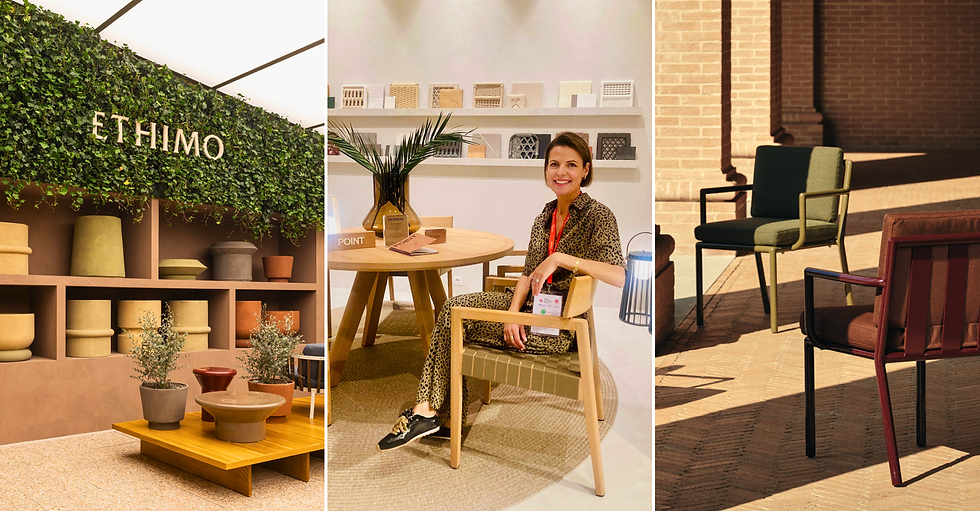
At Milan Design Week, Wolf & South explored the European design ideas shaping colour, comfort and outdoor living.
For Wolf & South, Milan Design Week is not simply a place to observe what is emerging. It is a point of orientation for European outdoor furniture, material direction and the way design is beginning to shape life outside. It is a chance to step into the wider conversation of European design and consider what has resonance beyond the exhibition floor: what feels enduring, what feels useful, and what might meaningfully shape the way homes are lived in here.
Milan Design Week 2026 pointed toward spaces that feel complete — where furniture, landscape, light and architecture work as one.
In 2026, the strongest ideas were not defined by spectacle. They were quieter, more spatial, and more emotionally intelligent. Colour was used with architectural intent. Materials were expressive without feeling excessive. Comfort moved beyond softness and into composition. And the line between indoors and outdoors continued to dissolve — not as a styling gesture, but as a more complete way of living.
For the wider design community, these ideas speak to a broader shift: interiors, architecture, landscape, and furniture are no longer being considered in isolation. The most compelling spaces are being designed as complete environments, where texture, light, colour, and furniture work together to shape atmosphere.
For Wolf & South, that thinking feels especially relevant to premium outdoor furniture. The terrace, courtyard, poolside, balcony, or deck is no longer an afterthought to the home. It is part of the home’s rhythm — a place for gathering, retreating, dining, reading, resting, and moving easily between architecture and landscape.
Colour with architectural intent
Colour in Milan was not simply decorative. It had weight. It was used to hold a room, define a volume, soften an edge, or give a piece of furniture a stronger spatial presence.
Colour appeared less as decoration and more as structure — built into frames, fibres, finishes and the atmosphere of the space.
Saturated greens, deep blues, warm oranges, clear yellows, softened terracotta tones and earthy reds appeared across furniture, surfaces, textiles, and installation spaces. What made the use of colour feel compelling was not brightness alone, but confidence of placement. Colour was not treated as an accent added at the end. It was part of the design language from the beginning.
This is an important distinction. In refined spaces, colour works best when it is given a role. It can define a dining zone, anchor a lounge setting, draw the eye through a room, or create a natural pause between one area and the next. When used tonally, it can also bring depth without noise — a palette of muted greens, off-blues, rust, clay, and sand can feel layered and calm rather than decorative.
Outdoors, this has particular relevance. For many years, outdoor furniture has leaned heavily on neutrals: white, charcoal, grey, teak, and stone. These remain essential because they sit comfortably within architecture and landscape. But Milan offered a reminder that colour, used with restraint, can bring a space into sharper focus.
A deep green lounge setting can speak beautifully to planting. A rust-toned cushion palette can warm concrete, timber, or stone. A dark blue frame can add definition against pale cladding or coastal light. Even a single outdoor rug, side table, or powder-coated frame can shift a deck or courtyard from functional to composed.
For Wolf & South, the most interesting use of colour is not loud or seasonal. It is integrated. It lives in the frame, the fibre, the weave, the cushion, the ceramic surface, or the way one material sits beside another. It is colour as atmosphere, not decoration.
Outdoor furniture as part of a complete room
One of the clearest shifts from Milan was the continued softening of boundaries between interior and exterior life. Outdoor references appeared indoors through woven textures, natural fibres, planting, relaxed silhouettes, and material warmth. At the same time, outdoor furniture was increasingly presented with the depth and care of interior furniture: layered, generous, tactile, and fully resolved.

Outdoor living is becoming more complete — shaped through lounge, dining and poolside zones that feel connected to architecture and landscape.
This matters because it reflects a wider change in how homes are being designed and lived in. The outdoor area is no longer just a place to place a table or a few chairs when the weather allows. It is becoming a true room — one that may not have walls, but still needs proportion, comfort, lighting, shade, texture, and a clear relationship to the architecture around it.

A composed outdoor dining setting where furniture, landscape and architecture create the feeling of a complete room.
A well-considered outdoor space has the same design requirements as an interior. It needs a focal point. It needs circulation. It needs a balance of openness and enclosure. It needs furniture that relates to the scale of the house, the view, the sun, the prevailing wind, and the way people naturally move through the space.

POINT Rivoli loungers bring a calm architectural rhythm to poolside living.
This is where outdoor design becomes more than furnishing. It becomes spatial planning.
A courtyard may call for low, sculptural seating that keeps the view open. A generous deck may need separate zones for dining and lounging, connected through material consistency. A poolside area may need furniture that feels relaxed but still visually disciplined. A balcony may need fewer pieces, chosen with greater precision.

A quiet outdoor vignette where sculptural comfort, proportion and view are held in balance.
The most successful outdoor rooms are not overfilled. They are edited. A central lounge setting, outdoor dining furniture with architectural clarity, a side table where it is genuinely needed, lighting that softens the evening, shade that feels integrated rather than added — together, these elements create a space that feels natural to inhabit.
For New Zealand homes, this thinking is particularly relevant. Outdoor living is deeply embedded in the way people gather, entertain, and unwind. But the climate also asks more of every piece. Furniture needs to hold its form, retain its comfort, and sit well within changing light, coastal air, strong sun, rain, and seasonal shifts.
The best outdoor furniture does not announce its performance. It simply continues to feel beautiful, comfortable, and resolved over time.
Comfort becomes curated
Comfort was everywhere in Milan, but not in the obvious sense. It was not only about deep cushions or soft upholstery. It was about proportion, placement, mood, and how a space invites the body to settle.
Curated comfort begins with proportion — fewer pieces, chosen for presence, softness and spatial clarity.
The most memorable settings were not crowded. They allowed furniture to breathe. A curved lounge, a sculptural table, a generous chair, a textured surface, a single saturated tone — each element had enough space to be understood. This restraint gave the rooms a quiet confidence.
For outdoor spaces, curated comfort is especially powerful. It asks a different set of questions. Where does the morning sun fall? Where do people naturally gather? Is the view something to face, frame, or sit beside? Does the dining area need to serve long meals, quick breakfasts, or both? Is the lounge setting for conversation, retreat, or entertaining?
When those questions lead the design, the space feels more intuitive. Furniture is no longer chosen in isolation. It becomes part of a wider composition: lounge, dining, shade, lighting, planting, surfaces and movement all working together.
The brands curated by Wolf & South each interpreted the Milan direction through their own language of comfort, materiality, and atmosphere.
This is also where materiality becomes essential. Woven fibres bring texture and softness. Timber introduces warmth and tactility. Ceramic and stone-like surfaces add visual calm. Powder-coated metal can define a line without feeling heavy. Upholstery brings the interior language outside, while performance sits quietly beneath the surface.
Milan’s strongest outdoor ideas were not about adding more. They were about choosing more carefully.
How the Milan ideas appeared across the brands we curate
The value of Milan is not only in the broader themes, but in seeing how those themes are interpreted by makers with distinct design languages. Across the brands represented by Wolf & South, the same ideas appeared in different ways: colour as structure, materials with depth, outdoor rooms designed as complete settings, and pieces that feel calm, confident, and made to be lived with.
POINT: material evolution and poolside clarity
POINT’s presence at Salone del Mobile spoke to a refined understanding of outdoor living: tactile, architectural, and quietly adaptable. The continued development of the TechTeak collection reflects a wider move toward materials that carry the warmth of timber while offering ease for outdoor environments.
POINT’s Rivoli loungers bring a composed architectural rhythm to poolside living.
The Rivoli loungers bring another expression of the same thinking. Slim, composed and beautifully proportioned, they feel especially suited to poolside spaces where furniture needs to sit lightly within the architecture. Their strength is in the balance between comfort and clarity — generous enough to invite long afternoons, but precise enough to hold the line of a terrace or pool edge.
Atmosphera: colour built into the frame
Atmosphera’s Bliss modular collection gives one of the clearest expressions of the colour direction seen across Milan. The olive-green frame is not decorative. It defines the structure of the sofa, giving the setting a quiet relationship with the landscape around it.
Atmosphera’s Bliss collection shows how colour can become part of the structure of outdoor comfort.
The collection also speaks to modularity in a refined way. Its curved form, generous upholstery and low, open arrangement allow it to create a lounge setting that feels relaxed without losing definition. It is an outdoor room in itself — soft, grounded, and visually resolved.
Ethimo: woven texture and natural rhythm
Ethimo's direction continues to hold a close relationship with nature, material and craft. The woven pieces shown against bamboo and warm brick settings are especially resonant: they show colour and texture working together, not as embellishment, but as atmosphere.
Ethimo’s woven forms show colour through texture — grounded, tactile and closely connected to nature.
The green woven lounge chair is particularly strong within the Milan conversation. It carries colour through material, texture and form, allowing the chair to feel connected to its setting rather than placed upon it. This is where craft becomes spatial — the weave catches light, the tone relates to planting, and the form holds its own without excess.
Coco Wolf: sculptural comfort and complete settings
Coco Wolf's Milan presentation brought a more sculptural expression of outdoor comfort. The forms are generous and rounded, but not casual. They hold their presence within large architectural and landscape settings, creating outdoor rooms that feel both relaxed and carefully composed.
Coco Wolf brings sculptural softness to outdoor spaces designed for lingering.
The Paloma collection, unveiled during Milan Design Week, speaks to outdoor furniture as atmosphere. It is comfortable, but also spatial. It has the softness expected of a lounge setting, with enough definition to sit confidently in hospitality, residential, coastal or resort-like environments.
HEATSAIL: warmth, light and colour after dark
The outdoor room does not end when the sun shifts. Lighting and warmth are what allow a terrace or courtyard to move from afternoon into evening with ease.

HEATSAIL’s anniversary DOME colour reflects Milan’s move toward warm, grounded tones.
HEATSAIL's 10-year anniversary DOME colour sits beautifully within the Milan palette — earthy, warm, and architectural. The special colourway reflects the same move toward grounded tones seen across furniture, surfaces and installations: shades that feel drawn from clay, stone, soil and late light.
DOME’s strength is that it treats heating and lighting as part of the atmosphere of a space. Rather than adding a separate outdoor heater or light source, it creates a more resolved evening setting — one where comfort, warmth and visual calm are considered together.
From Milan to everyday outdoor living
The clearest message from Milan Design Week 2026 was not that spaces need to be louder, brighter, or more elaborate. It was that they need to be more considered.
Colour has become more architectural. Outdoor spaces are being designed as complete rooms. Comfort is being shaped through proportion, material and mood. Furniture is no longer separate from landscape, lighting, shade or architecture — it is part of how a space is understood and lived in.
For Wolf & South, this is where the Milan conversation becomes practical. It informs how we curate, guide and shape outdoor spaces for real homes: a courtyard that becomes a quiet retreat, a poolside setting that feels calm and composed, a dining area that carries long lunches into evening, or a modular lounge that adapts as life changes around it.

Work directly with Kristina and Nicky to shape an outdoor space with clarity, comfort and long-term ease.
The most enduring outdoor spaces are not built around a single statement. They are built through layers that feel natural together — colour, texture, comfort, shade, warmth, light and proportion. Milan offered the wider direction. The opportunity now is to bring those ideas home with clarity, restraint and ease.
Explore the Wolf & South collections or work directly with Kristina and Nicky to shape an outdoor space that feels beautifully resolved, from the first morning coffee to the last light of the evening.


